
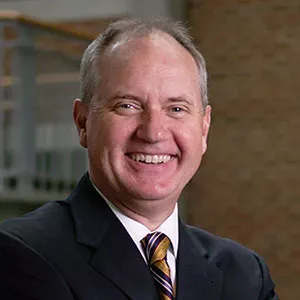
Michael Morris
Fisher Professor of Innovative Learning
Location , United States
Department:
Management & Entrepreneurship
Program:
Aerospace & Defense, Executive MBA-SL, Leadership & Strategy
Biography
Michael (Lane) Morris is the Associate Dean of Undergraduate Studies and Student Affairs and the Fisher Professor of Innovative Learning at the Haslam College of Business. Prior to his current position, he served as the Director of the Smith Global Leadership Scholars (GLS) honors undergraduate program in the Haslam College of Business. He has also served as a department head and former director of the Human Resource Management M.S. degree program at Haslam. Morris’ corporate experience includes working as a metallurgical R&D special projects engineer for Teledyne Firth Sterling.
Morris is also a Core Faculty member of the Aerospace & Defense MBA (ADMBA) Program and for the Strategic Leadership Executive MBA (EMBA-SL) programs in The Haslam College of Business. He is a past president of the Academy of Human Resource Development. Morris’ research interests include: Human Centered Leadership, Human Centered Design, Strategic HR, Leadership Development & Executive Coaching, Work/life Harmony, Assessment of performance-based intervention programs, and Stress/Health/Wellness. His interdisciplinary work has appeared in top-tier journals such as Organizational Research Methods, Human Resource Development Quarterly, Family Relations, and others. Morris serves on numerous editorial boards like the Academy of Management Learning & Education, Family Relations, and Human Resource Development Quarterly. He has professional certifications and credentials from the National Council on Family Relations and IDEO.
Executive MBA
For more than two decades, Associate Dean Michael Lane Morris has guided Executive MBA students in understanding the human dynamics that shape leadership effectiveness and organizational performance.
With experience spanning both corporate and higher education environments, Morris brings a practical perspective to leadership and human resources. His teaching explores the factors that influence how people perform, communicate, innovate, and respond to change. By applying human-centered leadership and design research insights to real organizational challenges, he helps executives strengthen their ability to lead through complexity and build high-performing teams. Students graduate better equipped to understand the human factors that drive long-term organizational success.